
Scroll

We optimize operations in complex healthcare environments
At Cara Cook Consulting our mission is to support the viability, sustainability, and affordability of US healthcare services.
We understand the delicate balance of support and accountability required to achieve and sustain better outcomes for your patients and business. We also have what it takes to get you there. Ask to see our results.

Cara Cook Consulting exists to sustain profitability and to optimize operations of US healthcare organizations, supporting them to provide and improve patient care for the communities they serve.
Interested in learning how we can help drive improvement at your organization? We’d love to hear from you!
Featured



Susan Law is a recently retired healthcare executive with extensive experience in hospital operations, nursing leadership, informatics, ER and OR operations, clinical process improvement and physician relations. Following her 30 year career with HCA Healthcare, Susan currently partners with Cara Cook Consulting to work closely with hospitals, large academic medical centers, and healthcare systems, assessing current state operations to develop and execute customized solutions designed to improve margin while simultaneously making a positive impact on patient and provider experience.


Becky is a former Vice President of Human Resources. With over 23 years of executive healthcare leadership experience, Becky possesses an extensive knowledge of all facets of human resources and healthcare operations.

With extensive process improvement and hospital administration experience, we know high quality and cost effective healthcare are not mutually exclusive. Improving patient and provider experience while simultaneously reducing cost is our absolute passion.

recent ARTICLES
Newsroom - Cara Cook Consulting

While procedural departments are significant contributors to hospital revenue, ensuring staff are available to perform emergent cases 24/7/365 is a constant challenge. On-call programs are a common staffing solution for off-hours needs, but they can drive significant recruitment and retention challenges. Particularly in small departments, on-call and call-back requirements can be a key driver of the “fatigue factor” for staff.

Contract Labor is not a Dirty Word: Lessons learned in leveraging contract labor and travelers to ensure the right staff are in the right place at the right time to support excellent quality care to patients.

Demand Matching: a data-driven approach to ensuring your staff are in the right place at the right time.

The impact of unavailable staff can lead to overreliance on premium labor and overtime leading to unnecessary labor spend. The hire ahead strategy can help ensure you have the right staff available to provide quality patient care by factoring in historical turnover and recruitment efforts to determine the department’s hire target.
This article walks through the hire-ahead exercise and how you can begin completing this at your facility.

Hospitals establish and manage to productivity targets to ensure that the right number of staff are available to care for patients. Balancing financial, clinical, and operational goals, thoughtful productivity targets ensure the department is not overstaffed or understaffed, supporting operations, quality care, and patient satisfaction with efficiency.
When hospital finance sets productivity budgets, it is very common for department leaders to ask questions like, “Why is this my target?”, “Where did this number come from?”, or “This can’t be right.” “Is this really how my peers are operating?”.

Top performing hospital leaders are always searching for innovative ways to reduce the cost of healthcare without adversely impacting care and services provided. Labor spend constitutes over half of total hospital expenses and is widely considered the most controllable expense, leading to employee furloughs and layoffs in the current environment. However, there are alternatives.
recent newsletters
Newsroom - Cara Cook Consulting

Nursing shortages and vacancies have always been an issue in healthcare operations, but every year it is becoming more concerning, and even crippling, in hospitals across the country.
Unfortunately, there is no one-size-fits-all solution when it comes to staffing shortages. However, there are proven best practices that can make a difference!
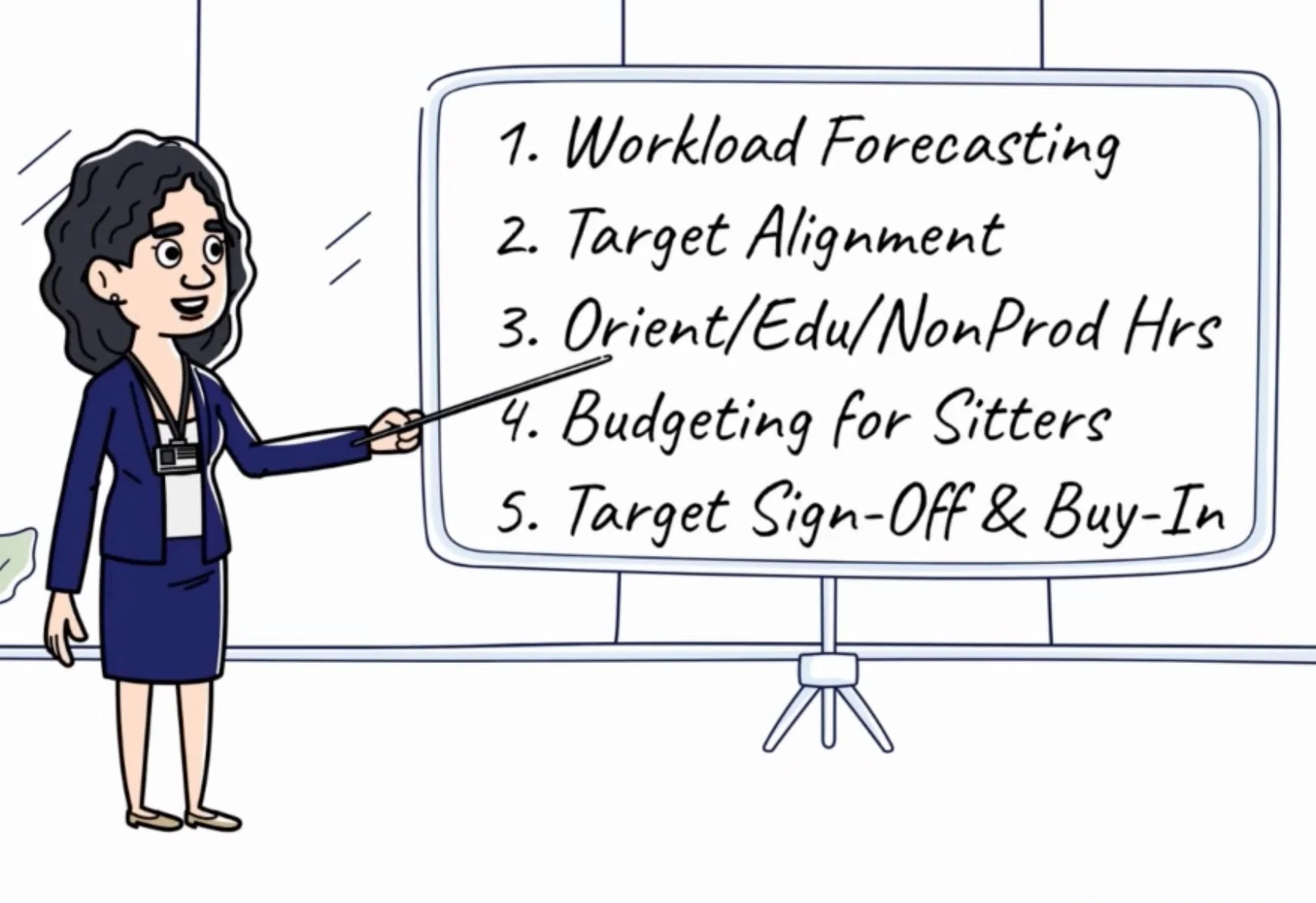
Uninformed labor cost projections can make or break your budget, but it can be tough to know where to start - which is why we've prioritized 5 key areas of focus for you! If you're looking for a hospital FTE budget study guide, keeping reading!

Have you ever wondered how finance sets a department's budget each year? While most explanations we've heard sound quite complex, the truth is quite simple.
There are only 3 ways to set a productivity target: Run Rate, Benchmark, and Zero-Base
Leaders struggling with their target often ask this question and most are unable to get a straight answer - perhaps because the person they are asking isn't sure. This common complaint inspired us to share this newsletter and we hope it helps!

How do organizations accurately determine the number of Full-Time Equivalents (FTEs) needed to fill staff schedules without requiring overtime?
If you’ve ever worked on this problem, you know that hiring 30 FTEs does NOT imply 30 FTEs will be worked. This means FTE totals taken from the HRIS system are unreliable (no, we aren’t referencing nonproductive time, although it also must be considered when calculating productive availability)!
To truly understand staffing commitment, we must review historically worked hours for each team member. A team member’s commitment is defined as the weekly hours they have agreed to work. As an example, 0.9 FTE RNs are hired to work 36 hours per week (typically in a 3x12 shift format).
Analyzing FTE availability begins with comparing this agreed-upon FTE commitment with actual worked hours.

How confident are you that your managers and directors are prepared to lead their teams?
Are you sure they have the tools they need to do a great job?
If so, you’re ahead of most. In healthcare we have SO many opportunities to improve, but we commonly trip over the finish line when it comes to execution. When it comes to change management, accountability is key, but support is often overlooked.
We observe poor leadership preparedness all the time – seeing it everywhere from academic medical centers to community hospitals – so we designed a solution– or at least part of one. Whether it is information about industry best practices or simply supporting sustainable growth through 1:1 coaching a resource to support improvement for new and tenured leaders should be available to them.

Both support and accountability are required to drive results, so understanding your role in this respect is critically important.
Support includes activities like education, 1:1 time, tools, communication, setting expectations, and other activities that help individuals achieve their goals. Accountability, on the other hand, facilitates individual responsibility including leveraging reports to ask tough questions, ensuring deadlines are met and that rules are enforced.
In the education field, our job is almost 100% support. What about yours?
Newsletter Block
This newsletter signup form needs a storage option. Edit the block and enter a storage location via the Storage tab.
FIND US ON SOCIAL MEDIA